
Add Primo Capital as a preferred source for more UAE property news, market insights and real estate updates on Google.
If you're wondering how to invest money in UAE, there are multiple reliable options to consider—far beyond just real estate. From premium properties to stocks, bonds, mutual funds, and ETFs, each investment path offers unique advantages for growing and securing your wealth. According to Arabian Business, the UAE continues to position itself as a leading destination for stable and rewarding investments. With a thriving economy and expanding financial platforms, now is an ideal time to diversify your portfolio and take advantage of the country’s dynamic investment landscape.

When it comes to global investment opportunities, few places match what the UAE offers. From thriving real estate in UAE to fast-growing sectors like tech startups, public equities, mutual funds, and bonds, the country presents a wide spectrum of choices for both local and international investors. While Dubai’s property market remains strong, other asset classes like stocks and ETFs are gaining ground among those seeking diversified returns.
Thanks to transparent regulations and evolving UAE investment laws 2025, investors now enjoy more flexibility, protection, and ease of entry. Whether you're building a long-term portfolio or targeting short-term gains, the UAE offers promising ground with minimal risk and strong potential.

Real estate remains one of the best investments in the UAE, offering tax-free income, high rental yields, and long-term growth. Investors can choose from apartments, villas, and commercial properties in prime areas. Expats enjoy freehold ownership in designated zones, allowing full control over their assets. Both off-plan and ready-to-move-in options cater to different goals—capital appreciation or rental income. Government initiatives like the Golden Visa further enhance property investment appeal, providing long-term residency benefits to qualifying investors.
If you're exploring how to invest money in the UAE, Dubai’s real estate market remains a compelling choice. With stable returns, rising demand, and high rental yields, property investment in the UAE continues to attract global buyers.
Investing in stocks means owning a share in a company with the potential to earn dividends and capital gains. The UAE offers access to three major exchanges—DFM, ADX, and Nasdaq Dubai—making it a strong choice for those exploring where to invest in UAE 2025.
Benefits include no tax on profits, streamlined access for expats, and online trading platforms. However, stocks can be volatile, so research or expert advice is crucial. Notably, DFM ranked fifth globally in index performance for 2023, with the market expected to grow 19.33% annually by 2025.
Mutual funds are pooled investment vehicles managed by professionals, offering exposure to stocks, bonds, and other assets. In the UAE, over 30 SCA-regulated funds provide access to local markets like DFM, ADX, and Nasdaq Dubai, as well as global exchanges. They’re ideal for those seeking safe investments in the UAE, thanks to diversification and expert oversight.
Funds suit various risk profiles but require a minimum investment of $500 to $3,000. Unlike stocks, units are traded at the end-of-day NAV, not in real time. Mutual funds are well-suited for passive investors focused on long-term portfolio growth.
Bonds are fixed-income instruments issued by corporations, the national government, or municipalities. They offer consistent interest payments—usually twice a year—and are often used to balance portfolios. Ideal for those debating whether to invest in UAE real estate or stocks?, bonds provide lower risk and capital preservation.
Though returns are modest compared to equities, bonds can be sold before maturity at a profit if market rates drop. Terms typically span 10–20 years. Corporate bonds require thorough research to assess issuer risk, making them a stable choice during stock market volatility.
ETFs are pooled investment vehicles, similar to mutual funds, but traded like stocks on the exchange. Mostly passively managed, they track market indexes and offer broad diversification. A popular option is the iShares MSCI UAE ETF, which covers around 40 equities across DFM and ADX—ideal for those exploring where to invest in UAE.
ETFs come with low fees, real-time trading, and transparency through public holdings. However, they may not perfectly match index performance due to fees and cash drag. They suit investors looking for flexible, low-cost exposure to multiple sectors within the UAE market.
Gold remains a trusted store of value, especially during inflation or economic uncertainty. In the UAE, you can invest in gold through bullion (bars or coins), gold ETFs, mutual funds, mining stocks, or futures and options. Physical gold is easily accessible via places like Dubai Gold Souk. As a low-risk asset with global liquidity, gold can help balance your portfolio due to its low correlation with stocks and bonds. However, unlike equities or bonds, it doesn't generate passive income. It's ideal for those seeking long-term wealth preservation and a hedge against market volatility in a diversified investment strategy.
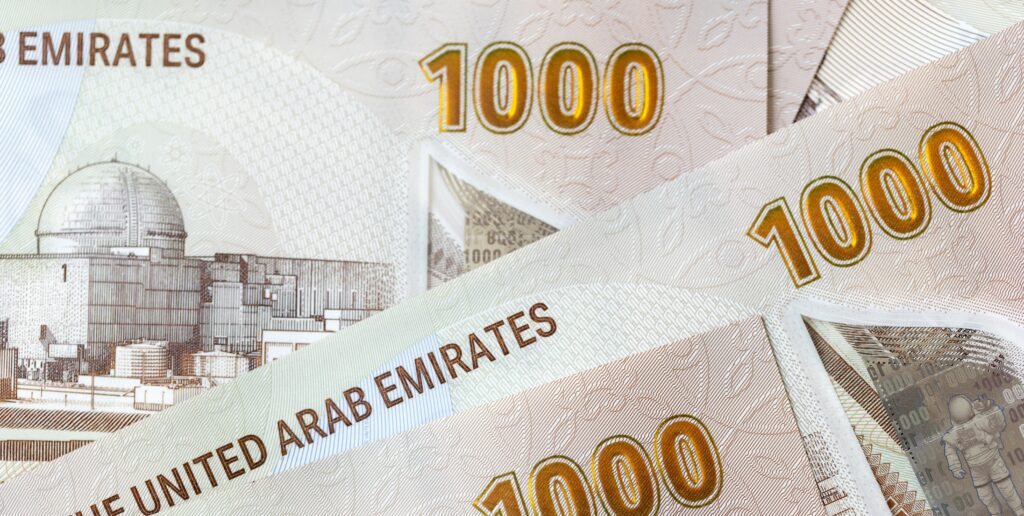
If you're wondering, how much money do I need to invest in UAE?, the answer depends entirely on the type of asset you’re targeting. From low-entry stock options to high-value real estate, the UAE offers flexible starting points for every kind of investor.
You can begin investing in the UAE stock market or ETFs with as little as AED 500. Many online platforms and brokers allow investors to buy single shares on DFM, ADX, or Nasdaq Dubai, making it a great low-barrier entry for beginners.
SCA-registered mutual funds typically require a minimum investment of US $500 to $3,000 (approx. AED 1,800–11,000). These are professionally managed and ideal for long-term investors seeking portfolio diversification.
To invest in government or corporate bonds in the UAE, you’ll need at least AED 10,000 to 50,000, depending on the issuer and bond type. Bonds are suitable for conservative investors looking for consistent fixed returns.
Buying gold bullion or coins from Dubai’s Gold Souk may require AED 2,000–5,000. For smaller budgets, gold ETFs or gold mutual funds start from around AED 500, offering easy access to the precious metals market.
If you plan to invest in real estate in UAE, off-plan properties often require a minimum down payment of AED 50,000, while ready properties typically start at AED 500,000 or more. For premium or commercial units, prices may go much higher.
Starting a small business in a UAE free zone may require AED 50,000 to 100,000, depending on licensing and setup fees. Expats can retain 100% ownership in these zones, making them attractive for entrepreneurial investment.
Whether you're starting small or planning a major financial move, the UAE caters to every budget. Understanding how much money you need to invest in UAE helps you pick the right path aligned with your financial goals.

The UAE investment laws 2025 allow greater flexibility and access for global investors. The biggest shift is the removal of the 51% local ownership requirement—foreigners can now own 100% of companies in most sectors, excluding a few strategic industries determined by the UAE Cabinet.
Key Reforms:
100% foreign ownership permitted in mainland UAE across most sectors.
Elimination of the need for a UAE national agent when opening a branch of a foreign company.
Foreigners can establish One Person LLCs, previously restricted to UAE nationals.
More inclusive rules for general assembly meetings, board compositions, and dispute resolution.
Revised share capital requirements and broader IPO flexibility (up to 70% public offering allowed).
These changes significantly improve UAE investment opportunities for foreigners, offering enhanced corporate governance, transparency, and operational freedom. Combined with residency reforms like the Golden Visa, the UAE continues to attract international investors with its open-market vision and reduced regulatory barriers.
Investing money doesn’t have to be complicated—but it does require a clear plan and informed decisions. If you're wondering how to invest money in UAE, the first step is understanding your goals and choosing the right investment vehicle—whether it's stocks, real estate, mutual funds, bonds, or ETFs. While the UAE offers many promising opportunities, not every option guarantees success. Some carry higher risk, so doing your research is key. Investing with purpose helps grow your portfolio steadily and reduces unnecessary risks. Below are some of the most effective strategies tailored for today’s UAE investment landscape.
Mutual funds and ETFs are great for beginners due to low risk and professional management. Off-plan real estate is also popular for long-term gains.
You can start with as little as AED 500–3,000 for stocks or mutual funds. Real estate usually requires AED 50,000 or more, especially for off-plan units.
Yes, real estate in the UAE remains strong with high rental yields, growing demand, and investor-friendly benefits like the Golden Visa.
Yes, foreigners can invest through DFM, ADX, and Nasdaq Dubai using licensed brokers or online platforms, with no capital gains tax.
Tax-free options include real estate, stocks, mutual funds, ETFs, and bonds—ideal for building wealth with no capital gains tax.

Property Advisor
Malik Adnan Bashir is a committed Property Advisor with 2 years of experience in the real estate sector. Fluent in Engli...
Feel Free to Contact Us at Any Time, We Are Online 24/7