
By the end of 2025, all key market indicators — from transaction volume to the cost of property in Dubai — showed steady growth. The number and total value of transactions increased by 20%, reaching 270,000 deals with a combined value of AED 917 billion (USD 250 billion).
In December, the average property price per square meter of real estate in Dubai rose 15.3% year-on-year to AED 19,418 (USD 5,285).
The primary drivers of growth are foreign investors, showing a 24% increase year-on-year, and the Dubai 2040 Urban Master Plan. This plan focuses on large-scale infrastructure projects, expanding green spaces to cover up to 60% of the city, expanding the length of urban beaches by 400%, and constructing a new metro line.
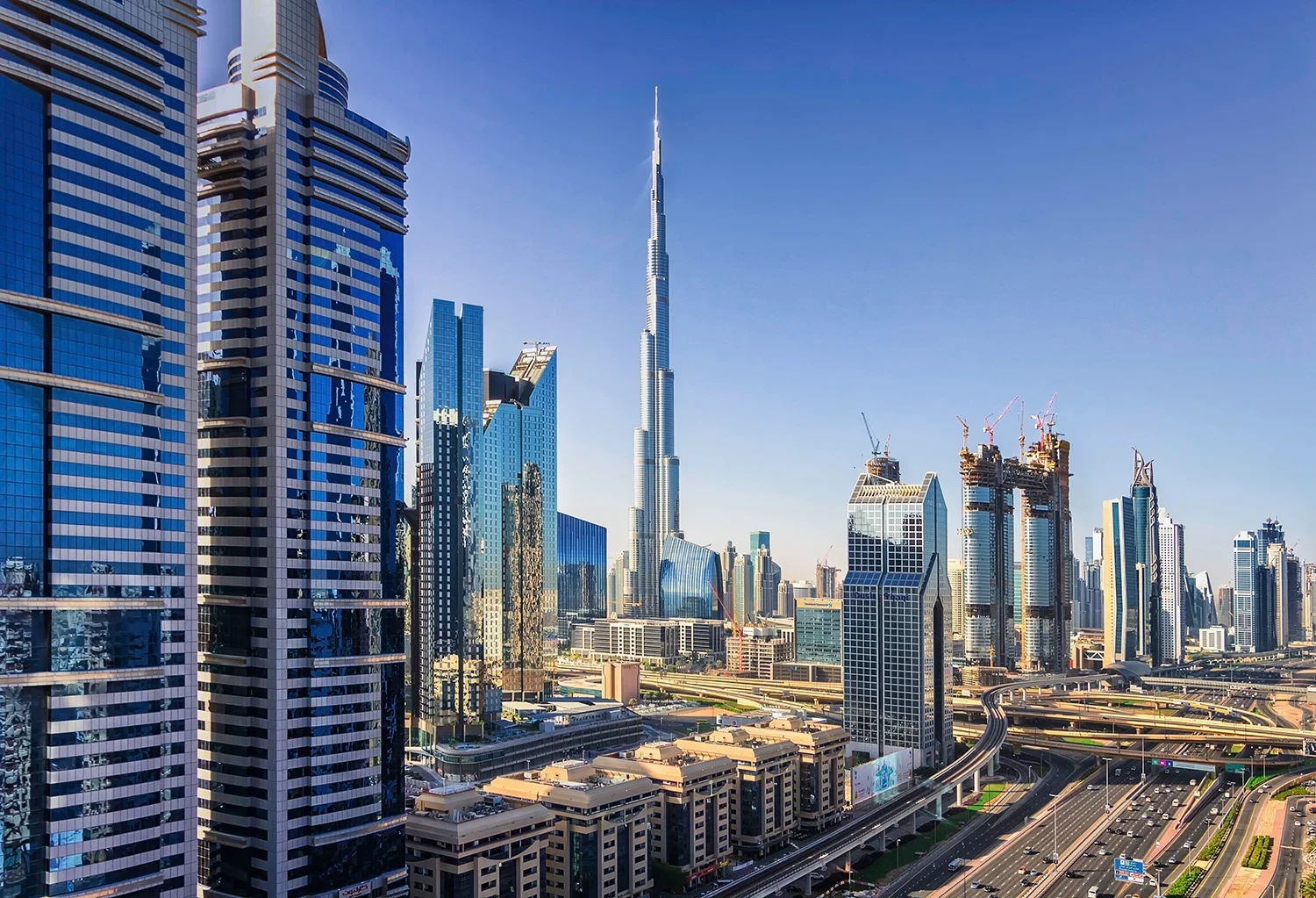

The top 3 developers of property for sale in Dubai are:
|
Developer |
Year founded |
Profile |
Key projects |
|
Emaar Properties |
1997 |
One of the largest developers in the UAE, focused on creating integrated urban environments |
Downtown Dubai, Dubai Creek Harbour |
|
DAMAC Properties |
2002 |
Specializes in high-end properties with strong design concepts, including branded residences |
Damac Hills, Damac Lagoons, Damac Islands |
|
Nakheel Properties |
2003 |
Known for landmark developments that create unique waterfront urban spaces |
Pal |

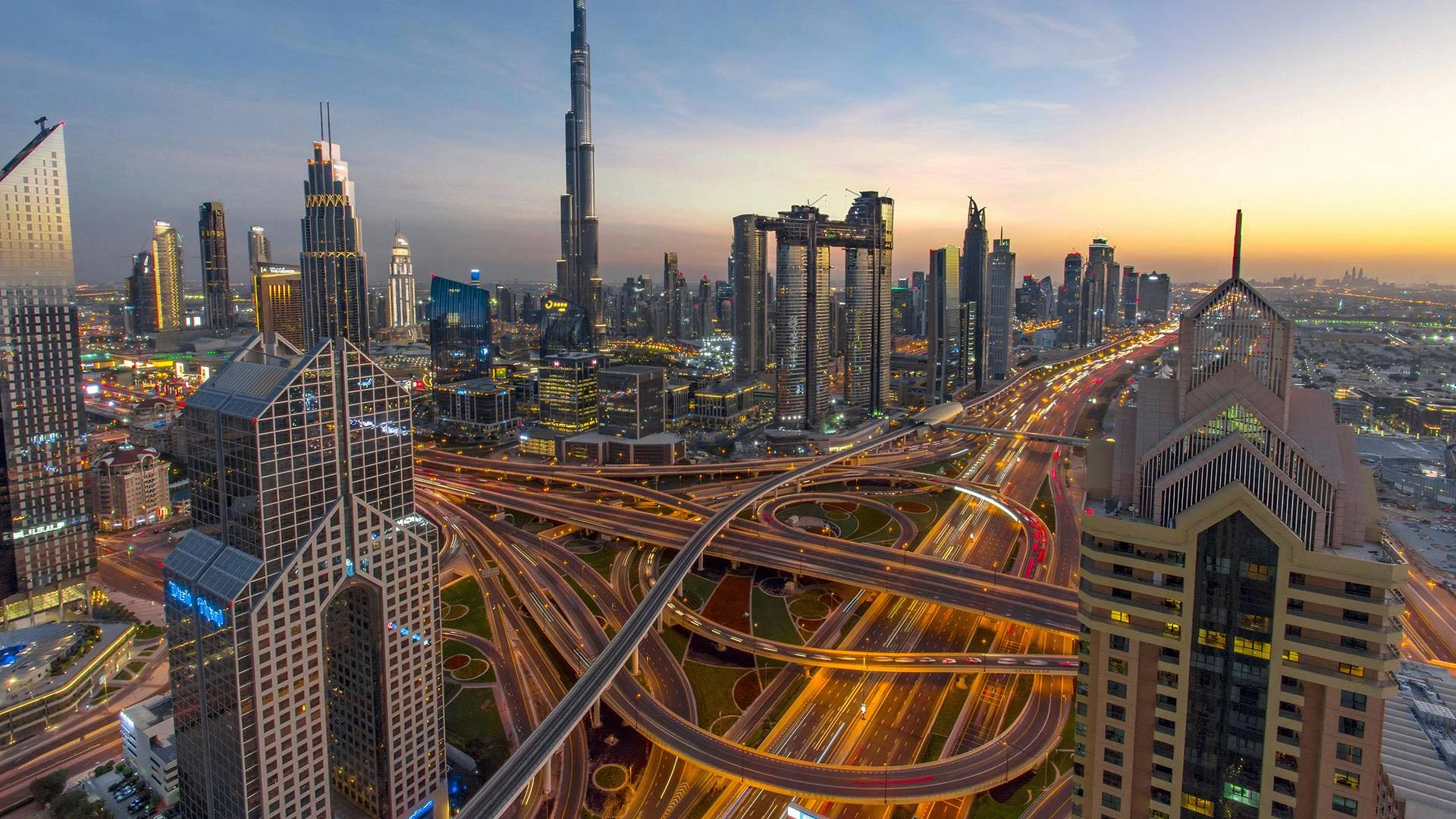
Dubai Marina — a waterfront district featuring a promenade, consistently high rental demand, and an average yield of 6.16%.
Business Bay — a contemporary business hub situated along the canal in the city center, actively developing, with yields around 6.61%.
Palm Jumeirah — an iconic island featuring premium villas and a beachfront lifestyle. Limited supply, yields ranging from 4% to 9%.
Jumeirah Lake Towers (JLT) — a high-rise community with lakes and parks, popular among professionals due to metro access and office proximity, with yields of 7.31%.
Dubai Hills Estate — a green district featuring a large golf course, popular with families and long-term tenants, offering yields between 4.2% and 7%.
Investors seeking maximum returns from apartments and studios in Dubai often choose the following areas:
The most profitable houses are located in the following communities:
Freehold areas are zones where foreign nationals are permitted to purchase property for sale in Dubai for permanent residence or investment, with full ownership rights and no time restrictions. Ownership rights are registered with the Land Department and can be freely transferred, sold, or inherited.
A central district centered around the Burj Khalifa and Dubai Mall. Infrastructure includes office towers, hotels, restaurants, pedestrian boulevards, public spaces, and transport links with metro stations and bus stops. The area is characterized by high-density development and provides direct access to key business zones in the city.
A beachfront community offering direct beach access. Infrastructure includes The Walk promenade and The Beach at JBR, along with restaurants, shops, beach clubs, hotels, and leisure spots. The area is entirely pedestrian-friendly and seamlessly connected to Dubai Marina.
A gated waterfront community situated between Dubai Marina and Palm Jumeirah. It provides private beaches, limited access, direct exits to Sheikh Zayed Road, and luxury residences with sweeping sea and city views. The area features modern high-rise towers with resort-style amenities, making it a popular investment destination with property in Dubai for expats.
An artificial island with residential, entertainment, and commercial infrastructure. It features Ain Dubai, pedestrian promenades, restaurants, retail areas, and direct bridge access to JBR. The limited number of properties attracts buyers looking for privacy and liquidity.
A large residential neighborhood with low- and mid-rise buildings near Ibn Battuta Mall. Its infrastructure includes schools, shops, parks, community spaces, and a metro station. The area provides more affordable housing options with high returns, making it popular among families and investors.
|
Residential project |
Property types |
Starting price |
Completion date |
Key advantages |
|
Greencrest |
Apartments with 1–3 bedrooms |
AED 1.57 million (USD 427,500) |
Q2 2029 |
Golf course views, gym, adult and children’s pools, playgrounds, event areas, concierge service, covered parking |
|
Liv Oceanside |
Apartments with 1–3 bedrooms, duplexes with 2–4 bedrooms, 4-bedroom penthouses |
AED 2.4 million (USD 653,500) |
Q4 2027 |
Private and communal pools, yoga decks, Jacuzzi, cinema, game room, library, massage room, wellness center, rooftop lounge |
|
Sobha Elwood |
Villas with 4–6 bedrooms |
AED 7.93 million (USD 2.23 million) |
Q2 2028 |
Green spaces with 10,000 trees, forest trails, 2 clubhouses, spacious terraces, private pools and outdoor leisure areas, dog park, tennis court, cycling track, yoga lawn |
Almost any buyer purchasing properties in Dubai for investment or personal use can obtain a mortgage, although terms are generally more favorable for Emirati citizens and residents. Interest rates fluctuate based on the loan type, borrower profile, and bank policy, and in recent years have ranged from 3% to 5%. Loan terms typically span from 5 to 25 years. Monthly payments can be calculated using a Mortgage Calculator.
The following mortgage products are available to buyers:
Foreign nationals holding a UAE residence visa are often offered more favorable terms across two key parameters:
Loan-to-Value (LTV) and down payment.
Banks finance up to 80% of the property value, meaning the minimum down payment starts at 20%. However, when purchasing properties priced from AED 5 million (USD 1.36 million), LTV typically does not exceed 65%.
Key requirements.
Banks typically require proof of a stable monthly income of AED 15,000-20,000 (USD 4,000– 5,500), along with a credit history and bank statements for the past 3–5 months. The borrower’s age must fall within the lender's age limits (typically 60–65 years at loan maturity).
Non-residents can also obtain mortgages, although the terms differ in several aspects:
LTV and down payment.
LTV ratios for non-residents are generally lower than for residents and usually range between 50% and 70% of the property value. For certain property categories or when working with specific banks, higher down payment requirements might apply.
Key requirements.
Non-residents must submit a more comprehensive set of documents, including a passport, proof of income, tax returns, bank statements for the last 3–6 months, a credit report from their country of residence, and a sale and purchase agreement. The approval process takes longer and involves a more thorough review of income and debt obligations.
Buying property in Dubai for foreigners: off-plan projects
|
Stage |
Description |
|
Property selection and contract signing |
The buyer selects a property, agrees on the price and transaction terms with the seller, and pays a reservation deposit (typically 10–20%). A contract is signed that specifies the price, handover date, payment schedule, and the parties' respective responsibilities. Transaction details are recorded in Oqood, the Land Department's electronic system, which provides legal protection for buyers. |
|
Stage-based payments and project monitoring |
Payments are made in accordance with the contract schedule and are typically linked to construction milestones. The final payment is made upon handover. During construction, buyers can monitor progress via official platforms or developer reports, reducing risks and improving transparency. |
|
Ownership registration (off-plan property) |
Before final handover, the property is inspected. After fixing any defects, ownership is registered with the Land Department, and the buyer receives an official document confirming ownership. |
Purchasing ready-to-move property begins with agreeing on terms between the parties and conducting legal due diligence. At this stage, the price, payment deadlines, and handover terms are set, and an initial deposit of about 10% is paid. Due diligence involves verifying the seller’s ownership and ensuring there are no mortgages, debts, or other encumbrances that could affect the transfer of ownership.
The final stage of the transaction occurs through the Land Department or authorized service centers. After full payment and all required fees are settled, the property is registered in the buyer’s name, and ownership details are entered in the government registry. The process concludes with the issuance of the Title Deed — the official document that confirms ownership of the completed property.
Initial costs usually include:
Foreign investors in Dubai properties for sale must provide:
The city’s population exceeds 4 million, with expats accounting for 85–90%. This creates a multilingual and multicultural environment, as well as a steady demand for property investment in Dubai. Residential development is arranged into neighborhoods with gated complexes, concierge services, secure parking, and on-site infrastructure, while mobility is supported by a large road network and a metro system over 90 km long.
Daily processes — from document applications to utility payments — are handled through government digital platforms, while street crime rates remain among the lowest in the world due to strict law enforcement and extensive video surveillance. As a result, the city ranked third in the Numbeo Safety Index by City in 2026.
The real estate market operates under centralized regulation and long-term urban planning. Transactions are conducted through the Land Department, and ownership rights are recorded in a government system, reducing legal and operational risks. Foreign buyers investing in property in Dubai do so due to:
Add Primo Capital as a preferred source for more UAE property news, market insights and real estate updates on Google.