The global race for taller skylines is heating up in 2025. A major shift has happened—the UAE supertall skyscrapers have officially passed the US. This marks a big change in the high-rise world.
With 37 buildings over 300 metres, the UAE has taken the second spot globally, while the US trails behind with 31. China, however, still leads by a large margin (source: (CTBUH). This blog breaks down the numbers, compares global trends, and looks at how UAE Supertall Skyscrapers are reshaping city skylines.
Supertall skyscrapers are buildings that stand over 300 metres tall. These towers have become a symbol of modern urban development and city identity.
In 2025, the UAE is now home to 37 supertall skyscrapers, with most of them located in Dubai. These include record-breakers like the Burj Khalifa, which stands at 828 metres. That’s not just tall—it’s the tallest building on Earth.
In addition to its completed projects, the UAE also has several towers under construction. These will further push its numbers up. To give some perspective, how many supertalls in UAE? The answer is growing year by year, backed by strong developer activity, tourism demand, and strategic planning. Among upcoming landmarks, Burj Binghatti Jacob & Co Residences will redefine Dubai's skyline as the UAE's new tallest residential tower upon its completion in late 2026, soaring to 557 meters in Business Bay.
In previous years, the US led the global high-rise movement. But in 2025, the shift is clear. The US has 31 supertalls, while the UAE now has 37. So, what changed?
One reason is focused investment in real estate and tourism in the UAE. Projects are approved and completed faster than in the US, thanks to smoother zoning rules and shorter construction timelines.
While the US continues to build, its pace is slower. Developers often face delays due to local regulations and limited urban land.
In contrast, the UAE keeps pushing vertical limits. Dubai alone has dozens of high-rise projects. This growth is not just about numbers—it’s about vision. That’s why UAE Supertall Skyscrapers are outpacing others, especially the US, in both scale and speed.
Let’s look at the Supertall Skyscrapers Ranking 2025 based on completed towers over 300 metres:
China still leads by a wide margin. But UAE has climbed to second, pushing the US to third.
When we look at all tall buildings over 150 metres, which country has most skyscrapers? Again, China leads with over 3,400 such buildings. The UAE ranks third globally with 345.
What makes the UAE’s growth interesting is its mix of completed towers and new developments. The number of under-construction projects in the UAE signals more gains in the coming years.
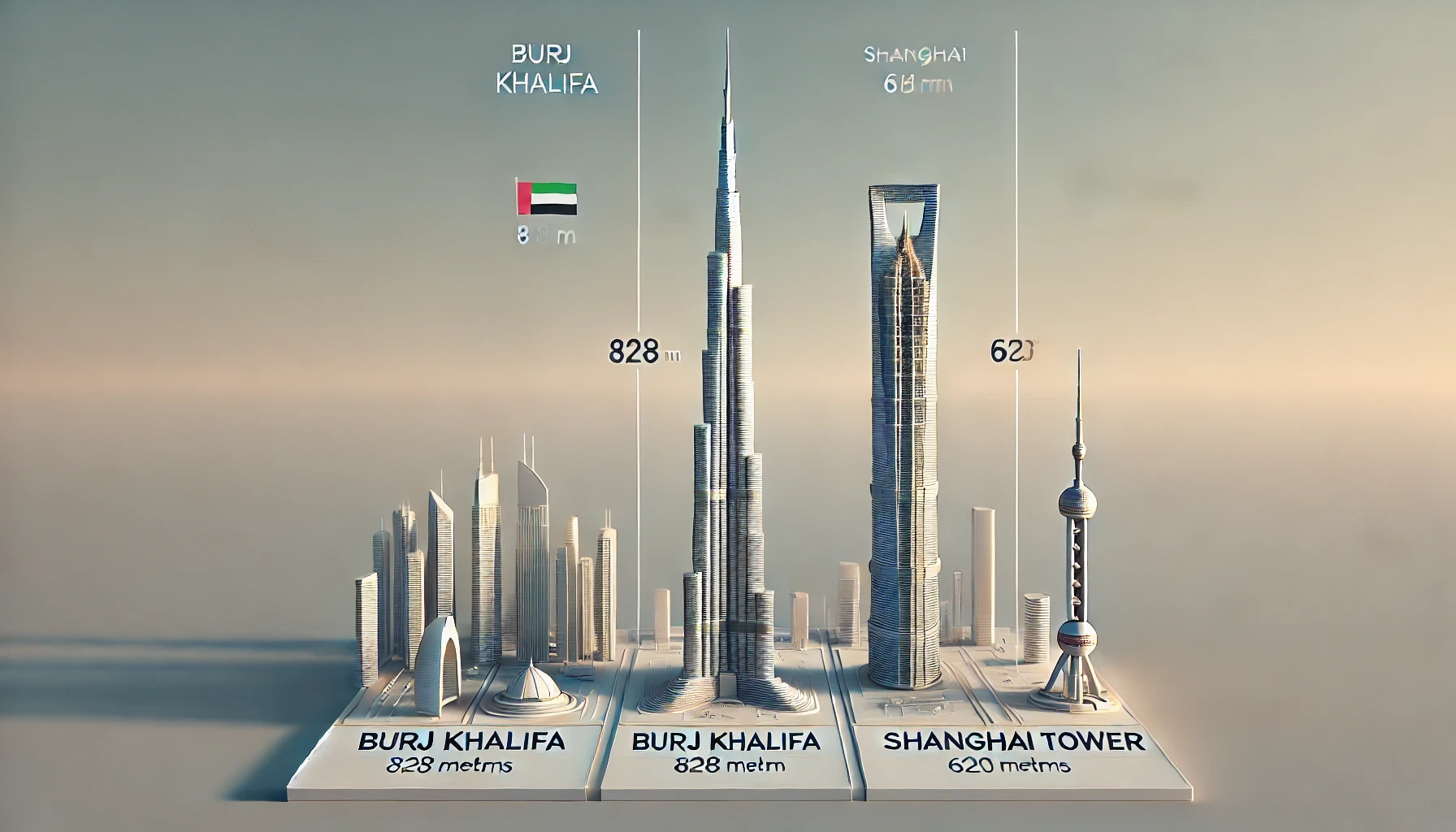
The debate around Burj Khalifa vs Shanghai Tower height often comes up in global rankings. Here’s the answer:
Burj Khalifa (UAE) – 828 metres
Shanghai Tower (China) – 632 metres
That’s nearly a 200-metre difference. The Burj Khalifa isn’t just taller—it’s unmatched.
While China’s Shanghai Tower is second tallest globally, it doesn’t top the list. With this, UAE Supertall Skyscrapers continue to hold the crown for height supremacy.
Other projects like the Jeddah Tower in Saudi Arabia may change the race in the future. But for now, the UAE leads in vertical ambition.
Let’s compare the tallest buildings in UAE vs China:
UAE: Burj Khalifa (828m), Marina 101 (425m), Princess Tower (413m)
China: Shanghai Tower (632m), Ping An Finance Center (599m), CITIC Tower (528m)
In terms of single-tower height, the UAE leads with the Burj Khalifa. But China has more skyscrapers overall.
While China’s numbers are higher, the UAE focuses on standout buildings. It’s not just about quantity—it’s about bold vertical designs. This strategy has helped Skyscrapers in UAE 2025 gain global attention and influence.
Expect more high-rise projects in both countries, but the UAE is closing the gap in quality and design.
Dubai skyscraper construction speed is another reason the UAE is climbing the ranks.
A project in Dubai moves quickly—from design to handover. Some towers are completed in 4-5 years. In the US, similar buildings may take up to a decade due to longer approval times and stricter regulations.
Dubai also benefits from a more flexible urban planning process. Developers have more control over land, timelines, and building specs. This leads to faster delivery and quicker returns.
That’s why UAE Supertall Skyscrapers rise faster—and in greater numbers—than their US counterparts.
The UAE Supertall Skyscrapers story is more than a number game. It’s about a shift in ambition, speed, and scale.
With 37 buildings over 300 metres, the UAE now ranks second in the world. Its lead over the US shows how planning and execution drive results. The skyline is changing—and the UAE is at the centre of it.
As China holds the top spot for now, the real question is: will the UAE be the next to lead? The race is on.
A: UAE Supertall Skyscrapers are buildings that rise over 300 metres. As of 2025, the country has 37 such towers, mainly in Dubai.
A: The UAE currently has 37 completed supertall skyscrapers, making it the second-highest globally after China.
A: The UAE builds faster due to easier zoning laws, quicker approvals, and strong investment in high-rise development.
A: China leads with over 3,497 buildings above 150 metres, while the UAE ranks third globally in that category.
A: Burj Khalifa in the UAE stands at 828 metres, making it taller than Shanghai Tower which is 632 metres.
Feel Free to Contact Us at Any Time, We Are Online 24/7